Wednesday, October 23, 2013

NO REQUIEM FOR A NAZI

 
My friend John was the first person who ever talked to me about Erich Priebke. An American World War II vet, he surprised me by saying he didn’t know what all the fuss was about. 
SS Captain Erich Priebke
This was back in the mid-‘90s when I’d first moved down to Bariloche in Patagonia, and I was just starting to find out about Priebke from the news reports about Italy’s attempts to extradite him for his role in the massacre that the Nazis had carried out in the Ardeatine Caves in Rome during World War II.
“Well,” I said, “you know, John, he’s a war criminal, a former SS leader, and, if the Italians are right, a mass murderer...”
John chuckled sardonically under his breath—something I’d learned he did when he didn’t believe a word you were saying. He reeled to his feet (we were sitting at his dining room table) and made his way to the kitchen where he kept his gin stashed out of sight of his wife, in a cubbyhole between a cupboard and the woodstove. His wife and mine were out on a walk along the lake and wouldn’t be back for a while so he wasn’t being as shy as usual about his gin. (Cheap white wine was what he favored throughout the day as his ostensible “sole drink of choice,” but the gin was what he used to keep his buzz going from morning to night). He deftly snatched the liter bottle of Gordon’s from its hiding place, poured a water glass half-full and, standing right there by the stove, he drank it down thirstily like water.
“Want another beer?” he asked, clearing his throat, his diction, as always, incredibly unslurred.
“No, I’m good for now,” I said, holding up my half-full can.
“Suit yourself,” he shrugged, adding, “Just grab one out of the fridge when you need it,” and then he meandered back to the table, sat down and poured his water tumbler full of chilled wine from a pitcher that sat on the table between us. The wine he sipped as he thought about where to go next with the conversation. That was the way conversations went with John—no rush, nice and easy. Originally from New Jersey, he hadn’t been in a hurry since 1968, when he’d negotiated a golden handshake from his executive post in Buenos Aires with the Eli Lilly pharmaceuticals firm and moved to the 200 acres of mountainside he’d bought here in Patagonia with a business partner. Back then, they’d bought it for a song from the widow of the former owner, because it was out in the wilderness where nobody wanted to live. He still owned 25 acres of it despite having lived ever since on the profits he’d made from selling off his half a couple of acres at a time, once there was electricity and a better road to get here, and the area started becoming attractive to people with a little money who wanted to get away from it all.
After a moment he chuckled quietly again, but his piercing blue, bloodshot eyes remained serious, unwavering. “Erich’s no murderer. He’s one of the nicest, most respectable guys you’d ever want to meet. I remember him from when he had his deli and butcher shop in town. Everybody liked him. And he’s been a pillar of the community, head of the German school and all that.”
“Just your everyday, good-guy storm trooper, huh?” I goaded.
“Oh hell, Dan,” he said, “he’s no more a storm trooper than I am.”
“Not strictly true, John,” I said.
“And he wasn’t any kind of Nazi leader like they’re trying to make him out to be,” he went on, ignoring and immediately forgiving my sarcasm. “He was a pipsqueak captain, an administrative one at that. He was a nobody. Whatever he did, he was just doing what he was told to do.”
“That argument hasn’t flown since the Nuremberg Trials,” I said. “And it doesn’t fly in the American Army either. I was a soldier like you. I know that you’re only obliged to follow all lawful orders. Somebody tells me to shoot a hog-tied civilian in the back of the head, that’s not an order, it’s a moral choice and I have to make it. I can opt to refuse.”
Again, the low, bitter chuckle, almost under his breath. “That’s pretty naïve of you, Dan. I mean for a former big-city newsman, at least. One thing’s the theory in the rule book. Another’s being at war.” His voice quavered when he said, “I did some things I’m not very proud of when I was following Patton’s ass through Europe, and I imagine your dad did too.”
“He never talks about it,” I said.
“With good reason, I’m sure,” he responded.
“So you were with Patton?”
“Sort of...like I say, behind him, kind of.”
“I guess everybody was sort of behind Patton,” I said. “To hear my dad tell it, Patton breezed through Europe with a convoy of tanks and then bragged about winning the war.”
This time John’s laugh was genuine. “Well, I never saw him out there directing traffic like they had George Scott doing in the movie, at least,” he snorted. He drained his glass and filled it with wine again. He sat there sipping his drink in silence, but I could almost hear him thinking. On his battered old Zenith stereo, Satchmo was singing “Jelly Roll”. There was always jazz on the stereo at John’s house. He’d shuffle back and forth for hours on end between his two loves, white wine and old-time jazz music. Sitting there at the table, the music coming from behind him, in the living room, he cupped his right ear, grinned and said, “I love this tune,” and then, in his scratchy, froggy, tenor voice, he softly sang along for a few bars: “My momma said today...when she went away...you be a goo’ boy, I bring you a toy...’cause I’m Momma’s pride an’ joy...”
Then his face went serious again and he looked me hard in the eyes.
“There was this time, somewhere on the Rhine, I think. We’d been fighting for days. We were exhausted. But by now we were winning. It was toward the end...sometimes house to house. It was ugly. We’d lost some guys. There were guys in our outfit that wanted to burn Germany to the ground. Anyway, one day we took this factory. When we overcame the security, we had our interpreter order everybody in German to come out with their hands up. They didn’t try to run or put up a fight. They came out single file, their hands in the air. All of the sudden this sergeant of ours points his forty-five at this kid at the front—because that’s what he was, just a kid—and shoots him pointblank in the head, right here.” John put his index finger to his left temple. “I was looking right at the kid’s face when he died. It was, like, surprised, his eyes, his expression when his brains flew out the other side of his head, and then he was dead.” John was seeing it, right now, I knew, as if he were there. Tears welled up in his eyes and one spilled over and ran down his cheek. He didn’t bother to wipe it away, maybe didn’t even notice it. It dripped from his chin. He went on: “I yelled, ‘What the hell are you doing? They’re giving up! What the hell’s wrong with you?’ But he just laughed and said, ‘These dumb-assed krauts deserve to die...’”
John rubbed his eyes, shook his head, as if trying to shake the image of that day, perhaps of what followed as well. “Even now,” he said, “I see that boy’s face, and so many other boys’ faces, every night before I fall asleep.” Now he looked at me intensely. “And I’m sure Erich sees the people he killed too, Dan...and the ones he didn’t. He’s a good man. I know him well. War’s hell, Dan. That’s not a metaphor. It’s a fact. You think a mere captain had any real choice in the Nazi army? He had to take part in that massacre or be killed himself for refusing a direct order from Hitler.”
“He had a moral choice, though, John,” I insisted. “He could have chosen death over such a heinous crime.”
John chuckled low and insincerely. “Nobody chooses death in war, Dan. Your only thought is surviving till the end.”
[READ THE REST OF THIS STORY AT http://yankeeatlarge.blogspot.com  ]

Monday, October 14, 2013

HOMETOWN SUNDAY


Downtown Wapakoneta, Ohio
An unseasonably hot mid-September morning in West-Central Ohio. Temperatures have been in the nineties for the past few days. Maybe global warming’s to blame. Or maybe it’s just a freak heat wave. There’ll come a storm, and suddenly, it’ll be fall.
Today’s Sunday. I came up yesterday from Miami, with its Caribbean-like tropical heat and sultry funkiness, dreaming of the late-summer and early autumn softness of Ohio September, only to find that the sizzling hell of Florida hurricane season had tracked me north and was waiting for me when I got off the plane in Dayton. I cranked up the air-conditioning on my rented car for the hour-long drive north to Wapakoneta, the uniquely named place that witnessed my childhood and adolescence, cranked it up too in the hotel suite that I booked at what I’ve come to call “the Worst Western” on the southern edge of town, then showered, changed and called an old friend. I waited to go see her until the sun went down and took a cold six-pack of Corona from the Zip Stop with me—the only thing I could think to take on an evening like this one.
Her mother was my friend before she was, when she was still just a little girl, and now she’s moved to her mother’s old place, so it’s a lot like getting together with family whenever I go back. The place hasn’t changed much...except that her mother’s missing from it—a really big change when I stop to think of it. I can almost still see her mother there in the living room in her favorite rocker, laughing and chatting with visitors who were always dropping by, a margarita by her elbow, a freshly lit Montclair between her fingers, a fat, lazy cat on her lap and a scruffy little dog asleep by her feet. I miss her. Her daughter misses her a lot more, can’t get over her being gone.
She (the daughter) has some Blue Moon and Modelo in the fridge, apart from the Corona I brought. So we order a pizza from La Grande—a local tradition for decades that followed another local tradition that once lived in that same building, my own family’s Teddy Bear Restaurant, which fed several generations of Wapakoneta residents from the forties through the sixties—and sit at her kitchen table, the front and back doors open, with just the screen doors to keep out the night and the bugs, swapping beers and stories until after midnight.
It was Saturday, after all, and who could sleep in this heat?
The Ohio Bar
Now it’s 9 a.m. on the Sabbath, and I’ve got downtown Wapakoneta practically to myself. It’s in the low eighties already, but I’m not paying attention to the heat. It’s a bright blue day and, like a tourist in my own land, I’m snapping pictures right and left. In a town like this one in rural Ohio, at this hour on a Sunday morning, people are in church, getting ready for church, sleeping in, having breakfast at home or out, or they’re already out at the Country Club practicing their swing. On the main street—which is called Auglaize Street, not Main (Main is a block over and, as I say, not the main one at all)—you could roll a bowling ball down it end to end and not hit a thing. The only signs of life are at the Ohio Bar and the Alpha, which have lights on in their windows and are apparently preparing for the first regulars of the morning. They’re the only two local taverns left out of the iconic half-dozen or so watering holes that lined the street in my youth. The Horseshoe, the Roxy, Minerding’s, The Brunswick, Hobo’s, The Koneta Inn (Ernie’s before it)...all long gone.
The Alpha
I stand in the middle of the deserted sidewalk on the south side of the street to shoot a store front and the frontispiece of a familiar façade—the emblematic Distelrath Building—on the north side and am suddenly aware of a shuffling presence just over my left shoulder. “Oh, sorry!” I say to a man who has stopped and waited patiently for me to take the picture. He looks a little emaciated in the oversized white t-shirt, flappy pastel blue slacks and tattered ball cap that he’s wearing. He has the bob-and-weave stance, red nose and wizened face of a serious drinker. “No problem,” he says softly. “Take your time.” And as I step aside to give him the right of way, he shuffles on to the door of the Ohio Bar and disappears into the twilight interior for his first steadying beer of the day.
The Alpha back bar an altar to Wapak tradition
They used to say that Wapak had more bars than it did churches. That’s no longer true, but I’m thinking that the regulars at the Ohio Bar and the Alpha may take that cultural tradition at least as seriously as any churchgoers do theirs. In fact, the Alpha is a kind of pagan temple, with the altar being its 120-year-old back bar that was the pride and joy of long-time owner and operator Bill Gutman. That barstead was carved and crafted in 1893, from solid oak, by the artisans of the Brunswick Balke Collender Company of Cincinnati. Back in the day, Bill was fond of telling whoever would listen that there were only three like it ever made, but that the only similarity was their size and style (24 feet long) since each bore its own unique hand-carvings. Now there was only the one in the Alpha and another one out in Arizona somewhere, since the third one had long-since been destroyed in a fire at the bar where it was installed (maybe in Chicago, I can’t recall anymore). 
Bill Gutman - himself a Wapakoneta
icon for over half a century
A good thirty years or so ago, Bill told my dad that a guy had come in one day and offered him fifty-thousand bucks, cash money, for that barstead, but Bill had turned him down flat. It simply wasn’t for sale. Was there any price he’d take for it, my father wanted to know? “Hell no, Whitie,” Bill had said. “That back bar is unique. Priceless.”
Priceless like the local history of the bar itself, the venue of record for how the town lived every era from the Gay Nineties through two world wars, Korea, the Vietnam era and right up to the present day. Like the stories they tell about how, in the days of prohibition, a few years before Bill himself became a part of its story, the Alpha was the speakeasy that served bootleg whisky to mafia kingpin Al Capone every time he breezed through town on the way to his hideout down at Indian Lake on Route 33, twenty miles away. As of 1938, Bill presided over the establishment for over half a century, first as the bartender, later as a partner, and finally, as the sole proprietor. His daughter started managing it in the mid-eighties, and his family still operates the place today, I’m told. Clearly, the pride Bill invested in his establishment and his reverence for that barstead have a lot to do with the fact that the Alpha hasn’t gone the way of the rest of the town’s old taverns and remains a Wapak icon even today. It also remains a tiny corner of the Wapakoneta I knew as a child, back when this was a real town with a life of its own, “Main Street” businesses, community pride and the stoic Scots-Irish-German culture of the farming community that surrounded it.
Now an antique mall, it used to be a stand-alone J.C. Penney's
As I make my way west to east along Auglaize Street, snapping pictures like a serial shutterbug, I rack my brain to try and recall what was where, way back when, before downtown became a jumble of antique shops, local service offices and craft stores. Where, for instance, was The Equity—the sandwich shop and dairy bar that Carl Sawmiller had run on the north side of the main drag in the post-war years? And what about Uhlman’s, what passed for a high-fashion ladies store in smalltown America back then—a place to buy formal wear, fancy lingerie, perfumes, scarves and such? I think I know, and then, all of the sudden, I’m not so sure. And what about the five-and-tens: G.C. Murphys—a long-successful national chain, famed for its Big Murph workwear, in addition to the normal knickknacks of its sector—Wrights, across the way, and W.T. Grants toward the end of the block on the north side of the street (although Grants thought of itself more as a department store than as a five-and-ten-cent store)...I count storefronts and struggle to locate their predecessors in my mind’s eye. Some are easy: What now is called the Auglaize Antique Mall, for instance, used to be a J.C. Penney’s, before the days of shopping malls, when the J.C. Penney Company had stand-alone stores on Main Street America. The manager they sent to run it in the early sixties was George Fox, who, it turned out, had a wonderful tenor voice and became a proud addition to the choir at the First Methodist Church.  But, if that used to be the Roxy over there, and that one there was Bud Abbott’s shoe store, and the other one over there was Bud Hemmert’s, where was the Moore’s Store, where I bought my first BB gun and accessories for my bike? It’s frustrating, like torturing yourself to find a name or a word that suddenly gets lost in some damaged fold of your gray matter.
Concentrate! Murphy’s candy counter at the front of the store exerted an irresistible force on us as kids, as well as on my father’s inveterate and insatiable sweet tooth. I reflect that this was typical of a lot of World War II vets: tough guys who loved their sweets. Was it just upbringing or coincidence? Or was it comfort food that helped them deal with what they’d been through—both the Great Depression and the worst war in the history of Humankind?

We might visit Murphys candy counter alone when we had a few cents to spend. But the real treat was to go there with Dad on a Friday evening—when some stores stayed open until nine—because his capacity for sweets knew no bounds and he would never leave there without several pounds of his favorites in tow: malted milkballs, Hershey’s chocolate kisses, “green leaves” (spearmint jelly candies), orange slices (a lot like the spearmint jellies but orange-flavored instead), roughly broken hunks of real milk chocolate, sugar-coated peanuts (burnt peanuts they were called), cream-filled chocolate drops, peanut-butter cups, cream-filled peanut clusters, Milk Duds by the scoopful, cinnamon balls, juju fruits, salted cashews, chocolate-dipped raisins and peanuts, licorice jellybeans, assorted gumdrops, lemon drops, little brown jug peanut candies, Brach’s chocolate-covered cherries and milk chocolate stars...the list was endless, and if we could have taken the entire counter with us, we would have.
A ghostly reminder of business past
Now, squinting through my camera’s viewfinder, I realize that on some of the old façades, I can still barely make out scant archeological traces of another age, like the faint shadow of the name “Piel’s” on a building at the east end of downtown. I see the faded remnant of the name and immediately get a vivid image of the store, and the two impeccably attired, aging men who ran it (who were, I can only imagine, the reason why, rather than Piel’s, people referred to the store as “Piel Brothers”). It was a long, narrow men’s store with shelves and shelves of fine dress shirts and cases of handkerchiefs, belts, bowties and other accessories at the front and racks of conservative ties, suits, coats, tuxes, sports coats and slacks at the back. Also at the back was a large glass case displaying fine felt, canvas and straw hats of different styles. It was there that I bought my first snap-brim Mallory of Fifth Avenue, when I was just sixteen and had begun playing with jazz bands in the sophisticated nightclubs of the City of Lima, Ohio, fifteen miles north of us, and wanted to look the part. There too, I would also later buy a fine hound’s-tooth topcoat (38 long in those days!) to complete the look of mature classiness that I was trying so hard to achieve.
Another Wapakoneta fashion icon, Zofkie’s, is—to my delight—still there, I see, midway down the street. When I was a boy it was Joe Zofkie and his father, Cletus (‘Clete’, they called him, a serious-faced, white-haired man always dressed in suit pants, white shirt and soft shoes, sleeves rolled to mid forearm, with a tape-measure around his neck and a piece of tailor’s chalk in his hand) who ran the place and they had the finest men’s wear in town. Later, Joe’s daughter Jeanne Marie (we called her Jeanie, when we were kids and so was she) installed a bridal shop in part of the store, and eventually ended up having the whole place to herself.
At the west end of the main drag, my “archeological dig” turns up another shadow of another age: Faintly on the front of a building that now, I think, houses law offices, I can still make out the words “Western & Southern Life”. My grandfather, Murel Newland, worked out of that building for a quarter-century. It was his home office for the “debit” (as insurance routes were called back then) on which he very successfully sold life insurance in Russell’s Point, Lakeview and other points southeast of Wapak for those two and a half decades. The names of his friends in that office—Scottie, Dutch, Morris, Red and others—still stick in my mind, because he always talked about them as if I should know them. And some of them I did, like big, ruddy-faced Red, whom I recognized immediately when he dressed up as Santa Claus for the Western and Southern family Christmas party that the company threw for its salesmen on the upper floor of that building and to which Grandpa and Grandma invited my sister and I when I was about four and she was about seven. 
Another archeological find, my grandfather's old office.
Sadly, what was once the Koneta Hotel and that in its latter years housed Ernie’s restaurant and cocktail lounge and later the Koneta Inn—a bar my late brother and I favored whenever we were both in town—now stands empty and slowly crumbling. As I take a couple of photos of it for old times’ sake, I recall an incredible anecdote. While working at a century-old English-language newspaper in Buenos Aires, I met an elderly man called Julius Robson, a proper New England Yankee, of 90, who had met a lovely Argentine woman, 70 years young, married her and moved to her country in the rapture of December love. When he found out I too was American, he asked where I was from.
“Ohio,” I said.
“Where abouts in Ohio?” he asked.
“Oh, a little town in West-Central Ohio,” I said. “You probably wouldn’t know it.”
“Try me, son,” he said. “I sold farm implements in the Midwest for many years and know just about every little town in the Tri-State Area.”
“Well,” I said hesitantly, “Wapakoneta...W-A-P-A...”
“K-O-N-E-T-A,” he finished spelling. “Used to rush to get there for lunch just so I could have some of Mrs. Steinberg’s delicious sugar-cream pie for dessert. Best pie I ever tasted in my life was in Wapakoneta.”
“Mrs. Steinberg?” I queried.
“Yes...the Steinberg Hotel. Big masonry building there on the main street...what was it called? Auglaize Street, right?”
“Oh, you mean the Koneta Hotel,” I said.
“Well,” he said, “perhaps it’s changed hands.” This was in the 1970s and I knew it had been called the Koneta Hotel at least since I was born at the end of the forties. “A pity,” Mr. Robson continued, “since the Steinbergs were such nice people, so hospitable.” And then he sat there, staring, a quizzical smile pulling at the corners of his eyes and of his heavy white handlebar moustache. “Tell you what,” he said finally, “next time you’re back there for a visit, take a look at the sidewalk right at the front entrance on Auglaize Street. I’ll bet good money there’s still a marble slab right in front of the door that says Steinberg Hotel on it.”
For Julius Robson, it was the Steinberg Hotel.
 I knew it as the Koneta.
The next time I was back on a visit, I did just that. There was now a heavy doormat in front of the entrance to the old Koneta Hotel, but for curiosity’s sake, I lifted it up and there was the marble slab that Julius Robson recalled. Steinberg Hotel, it read.
Back at the “Worst Western”, I download the dozens of pictures I’ve shot on that hot Sunday morning, and as I do, I think again about Mr. Robson’s story—and the incredible coincidence of hearing it halfway around the world in Buenos Aires. As I look at the pictures, I realize that no one who looks at them without having lived the same childhood I did—in other words, no one not from my town and same generation—will ever see the same things in them that I do. Just as with Julius Robson’s pleasant memories of Mrs. Steinberg’s friendly hotel and delicious sugar-cream pie, the things I see and feel in that town no longer exist anywhere but in my mind’s eye and in my heart. For others, they’re just pictures of another rural town that has all but died. For me, it will always be home...and always as I remember it, not as it is.
 

Tuesday, October 8, 2013

THE JOYS OF MODERN AIR TRAVEL


A few days ago, I returned to Patagonia, where I live, from my first trip “back home” to the USA in over four years. I had a great time! Got to know parts of Miami I’d never seen before—places that made me forget for a while how much I hate the climate there (Nordic by nature and 18 stone by bacchanalian inclination, I don’t do Turkish-bath hot and sticky well)—met, face to face, a long-time virtual friend and fellow writer Paul Toth (a meeting I shall always consider historic), in an unseasonably torrid Ann Arbor, Michigan (in the blazing mid-afternoon sun on I-475, the “exterior temperature” on my fancy rented Ford Fusion read 101ºF or 38ºC), enjoyed early autumn weather and relaxed times with family and friends in my native Ohio, and reconnected with people I hadn’t seen in years (more than ten years in some cases). I walked the streets of my home town from city limit to city limit, seeking to revisit and recapture memories of my youth, took myriad pictures of things that are only “points of interest” in my retrospective dreams, and listened, with rare leisure time and interest, to the life and times of every friend or stranger I met.
Like I say, it was a great trip! And I’ll very likely talk more about it later, either here or in A Yankee At Large. The only problem was getting there...and getting back.
I have to admit that, except on my very first flights, back in the golden age of air travel, when it was still considered a luxury—in my teens and twenties (the 1960s and ‘70s), when the premier world-class airlines like Pan Am and TWA still existed and deluxe Boeing 707s were all the rage, back when even flying military stand-by was a fairly pleasant experience—I’ve never really loved air travel. I’m not one of those people with an obsessive fear of flying. But neither do I like to fly. I just consider it a quick way to get where I want to go, a modicum of discomfort that I have to get through in exchange for more time to work and/or enjoy once I arrive at my destination.
Nothing like the comfort of the "tutto letto" 
But when time permits, for instance, I much prefer to take a bus the thousand miles from Northern Patagonia to Buenos Aires, when I go to the city on business. Not just any bus, mind you, but the so-called “tutto letto”: a luxury service that includes hot and cold meals and snacks; soft drinks, coffee, tea, beer, wine, whisky and champagne; individual headphones, music, videos and reading lights; heating and air-conditioning, pillows and travel blankets; and best of all, deluxe seats that recline entirely to a flat 180 degrees and that have head and footboards so that they can be made into comfortable and semi-private sleeping accommodations. It takes 19 hours to travel from the bus station in San Carlos de Bariloche to Buenos Aires, but the views all along the way, from Andean mountains and rivers to the Patagonian steppes, and finally to the oh-so-green and vast pampas, are absolutely spectacular and the luxury ride a time to relax, reflect, nap, catch up on reading, write in my journal and just enjoy leisure time with nothing to do but savor the journey.
The open road and all of
the amenities
Similarly, on my trips to the United States over the years, I’ve generally preferred to limit my flying to the big trip from Buenos Aires to Miami, where I’ve always rented a car and driven everywhere from then on—usually turning in the rental three or four weeks later with anywhere from 3,000 to 4,500 additional miles on it. So it had been about a decade since I had done any serious domestic flying inside the United States.

This time, however, I had some meetings to go to in Miami, didn’t figure it would be practical to have a car there, and so decided to fly to Ohio once my business was concluded in Florida. I chose Delta, because in order to get from Miami to Dayton (a straight shot up the line traced by Interstate 75 over Florida, Georgia, Tennessee, Kentucky and on over the river into Ohio, as the crow flies) other airlines promised to first send me on wild goose chases to places like Dallas-Fort Worth, Texas, or bustling O’Hare International in Chicago, before finally delivering me to southern Ohio, with several such connections taking an hour or two longer than my international flight from Buenos Aires to Miami had! Delta’s hub is in Atlanta, Georgia, right on the way to Dayton, and although I would have to have a brief layover and change planes in that southern hub, total trip time was only just over four hours. That wasn’t bad, I figured, in these days of hub-routing. I realize times have long since changed (long before my last domestic flight in the United States, in fact). But, just for the record, I can recall when “snow birds” flew direct from Dayton (the birthplace of aviation) to Florida in the winter. And I also recall flying direct from Dayton to Los Angeles when I was stationed there, at the Army’s Fort MacArthur Anti-Aircraft Artillery Base, in 1971. I know that the hub-traffic idea supposedly saves fuel and keeps the airlines from going bankrupt, but...just saying...air travel back in the day was, well, convenient. Now, it’s apparently no better than austere, uncomfortable and profit-prone.
My first surprise was when I was ordering my tickets and was given the option of buying “extra leg room”. I thought, “Well, that’s an interesting additional new service!” But even with my six-foot stature and 32-inch inseam, I’d never found what I had come to think of as “regular coach-class space” to be inadequate, so I skipped that option. The second surprise was when I got to the Delta check-in kiosk at Miami International and was informed that if I had a piece of luggage to check, I’d have to pay a fee of 25 dollars. In 45 years of air travel, and having taken, literally, hundreds of aircraft to different parts of the country and world, I had occasionally been charged a fee for overweight (not mine, my suitcase’s), but this was the first time I’d been charged a fee for checking a single, regulation bag. “Ha!” scoffed another passenger later, when I asked how long this had been going on. “You lucked out! You can get charged as much as 80 bucks or so if they decide your bag’s too big or too heavy." So, I quickly understood the “carry-on craze” with people seeking to pass as carry-on hand luggage bags that were clearly suitcases, and actually getting away with stowing 21-inch weekend bags (if they could lift them that high) in the cabin overheads, so that people like myself, who were toting real carry-ons (a briefcase and small shoulder bag) were asked to stow them beneath the seat in front of us)—a request I managed to flatly refuse...without being “tased” by an air marshal.

Speaking of which, I wonder if anybody has done a comparative psycho-sociological study of the “new” (and ever more humiliating) airport security with the rampant deterioration of airline services. Maybe airlines figure that if you’re self-deprecating and obsequious enough to let yourself be screened, half-stripped, felt up and cattle-herded through pre-boarding security, you’ll put up with whatever they dish out once you’re on board. So why bother with amenities?   
My second surprise was when I sat in my seat on the Miami-Atlanta flight. I immediately understood the “extra leg room” offer. It was tantamount to a dognapper’s offer to sell you back your own mutt after stealing it from your doorstep. Delta had simply moved the row in front of mine back a few inches—enough to make me uncomfortable to the point of wanting to never have to be subjected to a ride like that again, but not quite to the point of its being considered “cruel and unusual punishment” in a court of law. If I wasn’t willing to buy back the space in front of me that they’d usurped, somebody would be, and then it would just be my tough luck. It was a policy, I reflected, that tended to pit passengers against one another—like when I found myself vaguely hating the average-height, slender young fellow who sat down in the seat in front of mine and amply stretched his legs in my rightful space, which he’d had no compunction about purchasing and, in so doing, becoming part of the airline’s “extra leg room” scam. I would gladly have jabbed a knee into the back of his seat now and again to make him even a fraction as uncomfortable as I was, but my knees were already jammed so tight against his seat that I couldn’t move them enough to cause him any discomfort. Delta had thought of everything!
Paranoia set in when, shortly afterward, my seating companion (aisle seat B) arrived. Did the airline have, I wondered, sophisticated surveillance equipment that picked up your full-body visual image through your computer when you were ordering your ticket—I mean, why not, if the TSA could now scan you right down to your birthday suit before you got aboard—so that refusing to buy the extra space would also mean being seated with a physically incompatible companion? Because it was apparent that if there were two people on that plane that should never have been seated together, it was my trip companion and I. She was a sweet-faced young woman (an Atlanta schoolteacher, I would later learn) who was easily six-foot-four in her stocking feet, and weighing in, I’m guessing, at a towering and solid 275 pounds. Between us we easily broke a quarter of a long ton, and her thighbone, groin to knee, was, I calculated, a couple of inches longer still than my own, so that I was almost surprised not to see the other bourgeois “extra-space” man sitting in front of her forcibly ejected from his seat when she was finally able to impel and compress her impressive humanity into the allotted space with her large, round knees now wearing the seat in front of her for a hat.
For the next hour and a half she and I stoically bore our stocked-and-pilloried existence, smiling politely at each other (our lips were about all we could move comfortably) whenever the occasion arose and trying hard not to invade each other’s miniscule space. But by the time we landed in Atlanta we were practically joined at the hip and were on casual speaking terms—you can’t have one side of your body pressed to the side of another person’s body until you’re exchanging DNA through your perspiration without achieving some level of intimacy. But there was no time for lingering good-byes once we were on the ground, since we were a little late getting in and Atlanta’s a big airport to have to sprint through from one connection to another.   

Now sweaty from the intramural airport jog, I hustled aboard my Atlanta-Dayton flight and hastily took what I thought was my window seat in row 24.  “Well now,” I thought, “this is more like it,” as I stretched my legs in the ample room provided. “The other plane must have been a fluke, a replacement, a stand-in.” I sighed contentedly and snapped on my seatbelt.
But just before the cabin crew closed the door, in came a late-comer, who sauntered with devil-may-care demeanor along the aisle and stopped at my row. He looked so similar to the bourgeois “extra-room” fellow who had sat in front of me on the last flight as to have been cut from the same mold. “Excuse me,” he said, with a bored air, “but I think you’re sitting in my seat...” I stared dumbly at him. Then he held up his boarding pass and, raising his eyebrows, said, “Twenty-three A...” I looked over his shoulder at the number on the row across the way. And now I saw that he was right, even though, in all fairness, row 24 was wedged up so close to the back of row 23 that it kind of resembled the back half of one of those cab-and-a-half pick-up trucks. I stalled for a second: maybe by divine intervention, he’d be hit by lightning before we started to taxi.

“Is there a problem here?” a flight attendant asked.

“No,” I said, resigned to my fate, “no problem, I just made a mistake.”
Sitting in the aisle seat of my real row was an older lady (older, even, than I). She was about the size and shape of a china chest.

“You here?” she snapped.
“’fraid so,” I said apologetically. She sat there, completely blocking the entrance to the two-seat row, but glaring up at me with a look of, “Well, get on by, then!” until I finally said, “Sorry, but I’m afraid you’ll have to get up.” Sighing heavily, in obvious irritation, she did. I scrunched into my seat, which gave the impression of having even less leg room than the one on the other plane, and as I did, retrieved my safety belt buckle from the lady’s seat—still warm from her having sat on it, rather like a hen on an egg.

“I’m gonna be needin’ that!” she anxiously exclaimed.
“This one’s mine,” I said with a rehearsed smile, and then, pointing to hers, “That one’s yours.”

We strapped up and sat waiting. Her thighs seemed to be made of skin-covered custard and expanded when she sat, stretching the lap of her ample dress taut and overflowing under the armrest to also invade my seat. I pressed myself as far against the bulkhead as I could, but her leg modeled itself to mine like so much warm putty. It was hot on board. She was anxious and fidgety, sighing loudly again and again. She opened up the air vent above her and trained it on her ruddy, hypertensive face. I watched as the ground crew outside detached a large air hose from the plane in final preparation for our takeoff. As soon as they did, my companion’s air vent stopped hissing. She reached up and grabbed at it, twisting it desperately.

No air!” she cried, like someone waking from a bad dream. But just then, the captain turned on the plane’s own ventilation system, and cool air came hissing from the vent again. “Ah, air!” she cried. And so, throughout the hour-long flight, I would be regaled with randomly issued, monosyllabic comments of this sort. “Bright!” when the sun came through the porthole. “Rough!” when we hit a spot of turbulence. “Hot!” when she sipped the coffee they gave her. “Almost there!” when we were advised that we were beginning our final descent for the Dayton Cox International Airport. Meanwhile, I was trapped like a knot in a knothole, the seat in front of me making a lasting impression on my knees, the sides of my body and thigh pretty much one with hers.
The trip back to Miami with Delta a few weeks later was more of the same and I dreaded it throughout my stay. At one point I’d decided to surrender to their game and pay for the extra space, but this time, none was available. To add insult to injury, going back to Argentina from Miami, I was treated to a ride on one of the wide-bodied planes in the “new fleet” of the re-nationalized Aerolíneas Argentinas—three seats against one bulkhead, three against the other and four in a row in between. Though it offered slightly more leg-room than the Delta domestic flights, it was certainly not comfortable enough for an eight and a half hour run...or was it, I asked myself, that I was just getting old and cranky?
But no. I was sure that wasn’t it. I recalled other international flights where I’d had plenty of room to move and stretch my legs and sleep without having to worry about the seat in front of me kneecapping me, and where the miniature movie screen on the back of that seat wasn’t so close that I had to put on my reading glasses to see it. Nor had there been connection boxes for the armrest remote controls under each seat taking up half of the lateral leg room so that the only way to put your feet under the seat in front of you was ankle against ankle. In such discomfort, the flight seemed endless and I was thrilled, by comparison, with the leg room and comfort of the seats on the airport shuttle bus that I boarded for the 45-minute trip to downtown Buenos Aires once we landed. 
Ah, for the good ol' days of air travel!
It was a pleasant surprise, then, the following day, when I boarded my flight from Buenos Aires back to Patagonia and was given a seat with leg room that, in comparison with the other flights I’d taken, looked almost like first class. I commented on this to my latest seating companion, a guy in the know, who worked for the ruling party and was on his way to the interior on what he called a “logistical mission.”
“It’s one of the ‘old planes’ from the international route,” he said. “This is how the leg room used to be, before subsidies were cut and the airline had to start trying to make money.”
“Don’t I know it!” I said. And spent the rest of the flight longing for the good ol’ days, when air travelers were still treated with some dignity and flying was still considered fun.      


Sunday, August 11, 2013

PAUL TOTH: SCINTILLATING STORIES FROM THE BRINK


Paul A. Toth: The War Is Over, Let’s Go Shopping, preview of a coming attraction.

In the title story of Paul A. Toth’s soon-to-be-released short story collection, The War Is Over, Let’s Go Shopping, the protagonist has bought a decaying hotel where he’d hoped to sit in the doorway and watch the same piece of sky all day. It seemed the perfect place: “The previous owner told him, ‘You don't need money, do you? Because if you do, don't buy this place. You know how people go to 7-11 every day and buy a dozen lottery tickets, not because they hope to win but because it gives them an excuse to hang around and bother the clerk? That's the only reason to buy this place. Except you're the clerk.’”

But suddenly, the joint is jumping. Quoth Toth: “They came and they kept coming, making the Seaside Inn profitable, when it was supposed to fail. They came and came, soldiers mostly, male and female soldiers with their wives and husbands and girlfriends and boyfriends. They brought no children; maybe they came to make them. But now that the war was almost over, winding down, it was getting worse. Tom Schimmel had planned for years and years to run a failing business, but still they came, pushed to the edges by suburbs, pushed by socioeconomic reasons beyond his understanding, pushed by events, by generational tides, by who knew what, but pushed, pushed, pushed on him.”
And then he continues: “They came with full pockets. They shopped in the giant mall not far away. They left the motel empty-handed and returned with bags and bags and bags. They were loud. Man, Jesus, they were loud. Loud and boisterous. These were boisterous people, full of fuck you, fucking right, fucking A, get the fuck out of here, fuck and fuck and fuck fuck fuck. Driving pickups, jeeps. Bullying. Bullying air and space. Well, this is what you want in a war, fillers, occupiers, takers, pushers. He could admire that. But not here. For Christ's sake, not here.”
Having, in recent years, not only interviewed Toth, but kept up a more less running correspondence with him, and in so doing, having become his sort of pen-pal friend, this turn of fictional events seems to me typical of Toth’s own journeys through life, that carry him—like most outstanding talents—through moments of abysmal withdrawal, like an express train barreling into a long tunnel, only to shortly resurface into the incredibly stunning scenery of his ingenious mind, where curiosity and a vigorous life-force consistently draw him back out into extraordinary bursts of luminous creativity and verve that result in astonishing works of art and introspective expression.  
Like most of Toth’s short stories, this title piece is bare-bones brief (which makes the reader yearn for them to go on), psychologically incisive, and as kinetically intense as a one-two sucker punch that knocks the wind out of you. “The war was over. At eleven o'clock, a cheer went up, the women louder than the men... He appreciated a woman who could beat him senseless. It was a comfort to know that should some darkness one day rise within him, these women could defeat it. It made him feel close to them....” They are stories meant solely to be read in one sitting. Brief, stripped, nano-moments of revelation caught in a stunning snapshot—like a last-second stag in your headlights.
In “Psychologically Ultimate Seashore”, Toth paints a portrait of quiet desperation, to which he is clearly no stranger: His grasp of it is instantly recognizable to anyone who has ever been in its grip and his mastery of its description is enough to make the savvy reader sweat, hyperventilate and, perhaps, leave town in search of a new life. We visit Janet, the protagonist, at the precise moment in which such desperation has finally overwhelmed her, a pivotal point at which she must do something—anything—to break the mundane spell of Everyday Life, or perish. The delight of Toth’s telling of this intimate portrait is, precisely, that he doesn’t tell it, but paints the hyper-realistic scene with a brush so fine that the reader is transported inside the frame and assailed on all sides by the stifling climate and the need to join Janet in finding the exit sign.
“Ukrainamerica” returns to a recurrent theme in Toth’s repertoire: capitalism and communism both run amok. Getting into the skin, so to speak, of a Ukrainian girl imagining herself to be a girl from Ohio, in turn imagining what life would be like for a girl in the Ukraine, would seem quite a stretch for a middle-age Midwestern American author. Unless, that is, you realize that Toth is from Flint, Michigan—hometown too of renowned anti-establishment filmmaker, social critic and writer Michael Moore—a place that might be considered the poster city for US manufacturing’s demise and the aching heart of the steel belt turned rust belt in both Toth and Moore’s formative years. Perhaps only an American from the heartbroken streets of Flint (or Toledo, or Cleveland) could truly understand the gutting transition of the former Soviet Union after the fall of communism to the subsequent advent of a rabid Kaptalism that would prove more grueling for many than the system it replaced.
From her new job at a spanking new McDonalds the protagonist wonders if this is how a girl working under the golden arches in Ohio might feel. Ann Carol, Anna Kaslouska...which is which? They mix and mingle in a semi-reality as confusing as a Ukraine without communism or anything viable to replace it, or as an Ohio (or Flint) brought to its knees, with castrated unions incapable of stemming the flow of greedy caricature-capitalism that shuts down factories and ships jobs abroad in the name of The Almighty Free Market. Ann/Anna and her broken father Alex (who has always amused himself after hard days at the factory by letting the names of the American states roll off of his tongue) graphically represent just such a limbo. And Ann/Anna now clings to the golden arches like a shipwreck victim to the gunwale of a lifeboat, hoping to be pulled aboard. “What is this goddamn music?” Alex rages at the piped-in McMuzak in the transplanted American fast-food restaurant. “It’s soothing,” says Ann/Anna, and, she adds, “It’s American.” But for Alex, “This isn’t the Ohio I dreamed of. This is a nightmare.” To Ann/Anna’s mind, however, it’s a neutral zone between dream and harsh reality, where she might as well be in the America she and Alex have always imagined, since in a unipolar world, its caricature-surrogate has become inescapable.
This theme returns in the surreal “Lumpen Proletariat” in which Larry Jones of Pittsburgh evolves into Dimitrius Dzhamgerchinov of the Balkans who heads a mythical march across America from Fort Kent, Maine to Chula Vista, California, that pauses in the semi-metropolis of Bay City, Michigan, where he and his constituents demonstrate without chants or slogans, their blank banners flying to spread the word of their message-less message. It’s a story of lost identity and loss of trust in an amnesiac leadership.
And lost stories, lost identities are another recurrent element in Tothworld, as witnessed in the zany storyline of “Daughters of the American Sexual Revolution” in which the narrator describes her exasperatingly bland and self-protective man as ‘story-less’: “Poor Frank's parents had too much story of their own, so they left their son to his own devices. He didn't have any. Now he's forever trying to squeeze himself into stories, but like a guy with size twenty-three feet, he never finds a proper fit.” Or in “Kite Letter”, in which the protagonist confesses: “I exaggerate. My memories are painted in the style of the 19th century; I always picture myself wearing a peculiar hat, while the women's skirts are so layered and ornate they cannot possibly have been worn by a member of my generation. Perhaps such exaggeration reflects my thinking in those days, for I was a romantic. When young, I would fly kites, attaching to the strings the kind of love letters any girl would cherish.” Or in the frank dialogue and alcohol haze of “Kangaroo Court” that will not be unfamiliar to readers of Raymond Carver, or of—and to—other writers who have obsessively sought solace in drink and found, instead, oblivion, loss and sorrow: “I finished two more bottles. I climbed the stairs to my bedroom and took a nap that lasted the rest of the day. I slept well in a drunken way, dreaming of my few months with Missy, before Roy stole her from me. My dreams told me he was right when he said I had brought it on myself, as each time I appeared on the movie screen of my eyelids, I was drunk. I saw the time I crashed into her father's convertible when picking her up, and the time we went to a dance and I passed out in her arms, dropping through her grasp to the floor. But I also remembered the fine moments, when I thought she would be mine forever, when I held her in bed and believed I could be forgiven anything, that all would be forgotten, that angels would fly in formation with me through life, even if I occasionally walked into walls.”
These and the other scintillating stories in this book (by the author of the novels Fizz, Fishnet, Finale and Airplane Novel) are a veritable showcase for the concise and subtle craft of a sort of “watchwork” writer whose faux aloofness belies a raging zest for life and minutely detailed attention to the people and places around him, which borders on the obsessive, while investing profound empathy in every line he writes.

Sunday, June 30, 2013

RILEY HILL'S HORROR SIDESHOW

Independent American author Riley Hill isn’t the sort of lady you’d expect to have a dark side. She comes off as gentle, somewhat self-effacing and rather shy. She’s at ease with nature and likes quiet, contemplative places for her frequent hikes. She has read widely and deeply and is an admirer and self-taught student of more than a few classic fiction writers. She plays the fiddle and the mandolin in her downtime and loves Bluegrass and “pickin’ people”. Since her divorce a few years back, and with her kids long since grown up and gone, she’s been known to turn downright reclusive from time to time, when the world has gotten too stifling for her. Like the time she lived alone in a trailer, on an island, on the great Columbia River, in the lush wilds of Oregon for a couple of years, in order to force herself to come to terms with the stories in her head.
Independent autor Riley Hill
That particular experience resulted in a volume of stories that made it clear why she needed to come to terms with them, considering the darkness, mystery and evil that lurked in its pages. The mood-setting title story, called “Burn Pile” (originally—and eerily—entitled “Dark Smoke Things”) was a clear example: What other passersby saw as just an ugly scar on the lovely American Northwest island landscape where the rubbish got burned, Riley Hill imbued it with a sinister atmosphere, morbid intentions and a macabre story to match that makes the hair stand up on readers’ necks and makes them want to glance over their shoulders and lock the windows if they happen to be in the house alone when they read it.
Darkness, or what she calls the creep factor, is clearly Riley Hill’s muse. Of that muse, she says, “If you despise mysteries, hate horror, and loathe twists of reality, then you’re going to take issue with it. My muse is not amusing. It has an energy that sucks the life out of me.”
Hill says it’s not that she doesn’t try to “walk in the light” but that her mind just naturally seems to take her to “this other place.” And as a writer, with time and maturity, she finally just decided to roll with it. Burn Pile, which gives free rein to everything from an extrasensory dog to the haunting oppression of the black smoke things that the burn pile hides, is beautifully, yet frighteningly written in a style that doesn’t depend on shocking effect, literary trickery or bludgeoning people with a pickaxe to send chills up the reader’s spine. Instead, it makes use of the contrast between the seemingly ordinary and the frightful unknown that lies just beyond it to stimulate the reader’s own conveniently forgotten fears and repressed apprehensions.


In this sense, Riley Hill’s mention of Harper Lee’s To Kill a Mockingbird as her all-time favorite novel is no coincidence, since this single—and singular—book of Lee’s is, perhaps, one of the most masterful portrayals in contemporary American literature of the evil that lurks behind life as usual in a small picture-postcard Southern town. Says Hill: “To Kill a Mockingbird was the first book I read that truly juxtaposed innocence against evil in a way my eleven-year-old mind could absorb. This is my favorite book of all time, and I see it as both dark and light literature. It cracks the fragile shell of innocence and exposes the darkness within, but still somehow manages to emerge the reader into understanding and light. If horror can’t reveal light, it has failed in its true purpose.”
In Split River, a mystery-thriller that followed Burn Pile, Hill weaves a chilling story about a serial killer on the loose in a usually quiet community set in the Oregon coastal region, where great rivers wend their way to the ocean. Like her confessed contemporary hero, Stephen King, whose stories are almost as interesting for their descriptions of the stark landscapes of western Maine as they are for their creepy nature, Hill demonstrates a conversant knowledge of the Oregon watershed that goes beyond mere anecdotal descriptions. Of her research for Split River, her first published novel, she says, “I spent some time getting to know the island that figures in the story. I walked the trails and explored off the trails, interviewed residents and law-enforcement officials, watched the birds, and basically breathed the life. Most of my stories come from the earth, so I tend to be locale-oriented in my writing. For example, I’m currently living in southern Arizona and   absorbing the atmosphere there for my next project.”

In common with certain other thriller writers, Riley Hill has a way of taking even the sunniest landscapes and imbuing them with a darkness that overshadows reality—or perhaps, the illusion of reality, since, in her mind (and often in fact), even despite fair weather, there are very dark things going on. In an interview, I asked her what other writers had most influenced her in this sense, and who she considered to be great authors in the thriller genre?
“Like many in the genre,” says Hill, “I cut my teeth on Poe...No pun intended and sorry for the image! But other writers molded me as well. I think authors who use more subtext than slice 'em-dice 'em appeal to me, as I see the expression of horror as an author’s attempt to describe a shock, a feeling, and not so much an event. I’ve been influenced, for example, by John Steinbeck’s The Long Valley. I think it’s a good example of the inter-weavings of lives and how they play on each other to unknown and, quite often, ironic effect. Another classic that’s had a lasting effect on me is Henry James’s The Turn of the Screw, mainly because of the author’s masterful implications that leave the reader wondering what was real and what wasn’t.
“I feel I must give Stephen King his due here, as well. Not only do we share a birthday, but in my younger years, we shared a group mind. On more than one occasion I came up with a story I thought would play well, only to have him come out with a similar idea in novel form the next month. Also, he was a ground-breaker with contemporary, straight-forward looks into the dark side of ordinary peoples’ lives with novels like Carrie. At the time, the idea of challenging what could go wrong in a household built on love of Jesus was simply not done.
“Of late, I’ve discovered Dean Koontz and he’d fast becoming one of my favorite writers. He seems to still be experimenting with humor, insight, and even science fiction. He’s exploring the netherworld conscientiously and courageously.”
I pressed Hill on the issue of the dark side and why she chose it for her writing subjects when her dialogues, descriptions and craft showed a skill beyond any question of genre. In other words, why horror and not, say, slice of life or historical novels? Part of it, she thought, was a matter of preference and how her mind, in particular, functioned. But then again, what made me think “slice of life” was any more reality that the reality she was depicting?
Quoth Hill: “The light side only runs so deep and humans seem to pin it into place with happy events, and believe in those events as though they are the only reality. Undercurrents play against each other throughout life and I seek to shake the reader out of denial. Ultimately, horror writing is a sideshow to get people to count their blessings and enjoy life while they have it.
“In the early 1980s, I thought I could write comedy, and did draft a few articles. People who read my work at that time said I was ‘like Erma Bombeck only more outrageous.’ Then I went into journalism and that sort of killed that outlook. I also wrote screenplays for Tom Shaw Productions for a brief time, hoping to learn something about writing humor. However, it turned out that what Shaw made were blue movies, and I didn’t do well with that genre. In fact, when I went to work for him, I had no idea what a ‘blue movie’ was.
“Maybe someday my muse will inhale enough oxygen to explode with a fine piece of literary fiction. Who knows? It may or may not happen. But if not, there’s always next lifetime.
“In spite of appearances, I’m someone who really believes in and reaches toward the light. But then again, I’ve been accused, throughout my life, of looking too far into things, which often results in an ironic or jaded point of view. I started writing very young (my first five stanza poem was at age seven—called The Valley of Caine). My mother always asked ‘Why don’t you just write something beautiful?’ But like some other authors, I didn’t choose my genre—it chose me.
“I think the spooky stories my siblings and I told each other as children had an effect. I admired my older sister and her ability to invent stories, and my father told us spooky stories and played ‘monsters’ with us, so I guess I learned early to laugh at fear. Somehow, in spite of having led a sheltered childhood in Utah, I understood certain veins that bubbled just behind the temple of the average person. Later in life, some personal tragedies opened up a few of these veins for me, and I experienced first-hand what I had imagined in my stories.”
I invited Hill to talk about those personal horrors, but she wouldn’t take the bait, saying only that, “I believe undergoing these events provided a good foundation for expressing the feelings that accompany them—feelings that are uncomfortable for most people, but which many, in their lives, may be forced to confront. This is the silver lining of writing horror; helping others to deal with emotions and provide them with a ‘what if’ scenario to mentally prepare for negative eventualities.”
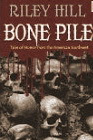
In the same macabre vein as her first two books, Riley Hill recently published another volume of short works called Bone Pile, which the fans of her unique “creep factor” are sure to enjoy. But when I asked if she was currently working on any new projects, her answer pointed to a slightly new departure.
Says Hill: “I’ve been outlining a series called Wanagi River, which may well not be formulaic enough to pass the genre muster. It’s a bit of a mix, involving Native American mythos, fantasy, and mystery. After three years of research, I wrote an ambitious novel in the early 1990s entitled Totem I: The Eye of the Wolf. This epic fantasy also involved Native Americans. I recently reloaded this novel into my computer and, after a decent amount of editing, will probably also have it published.
“I’m working on two other things concurrently: For NaNoWriMo, I’m putting together a series of short stories (horror) about the Southwest, as well as a trilogy (the first volume of which, called Deep Naked, came out on in a Kindle e-version this past month) that I’ve been drafting as time allows. I'm working on book two (working title: Skin Slickers) right now. 
“But I also continue to work on Wanagi River, which is on the back burner at the moment, but which I aim to deliver in the near future.”
All of Riley Hill’s works are available on Amazon.